Where M&A Pressure is Rising.
Mapping the U.S. where mid-size bank and credit union consolidation hits hardest.
Executive Snapshot
Engage fi’s third-quarter 2026 analysis identified 841 banks and credit unions showing financial signals consistent with elevated pressure to sell. That represents 9.8% of the 8,574 institutions studied. The total number of institutions under pressure declined slightly from the prior quarter, but the geographic mix continues to shift—creating new pockets of potential M&A activity across the country.
Summary of Findings
Engage fi identifies two levels of selling pressure using five years of trended FDIC or NCUA data:
- Watchlist institutions face enough financial strain that funding growth, technology, and other major investments may become increasingly difficult—making strategic alternatives more attractive.
- High-likelihood institutions face substantially greater strain, where remaining independent may become less viable, and a merger or sale may become a more immediate consideration.
This analysis is informed by back-testing against mergers announced before June 2026 and identifies financial stress signals in acquired institutions months before deals were announced.
Credit Unions
The maps below show where credit unions are experiencing the greatest pressure to consider strategic alternatives.
Credit Union Watchlist
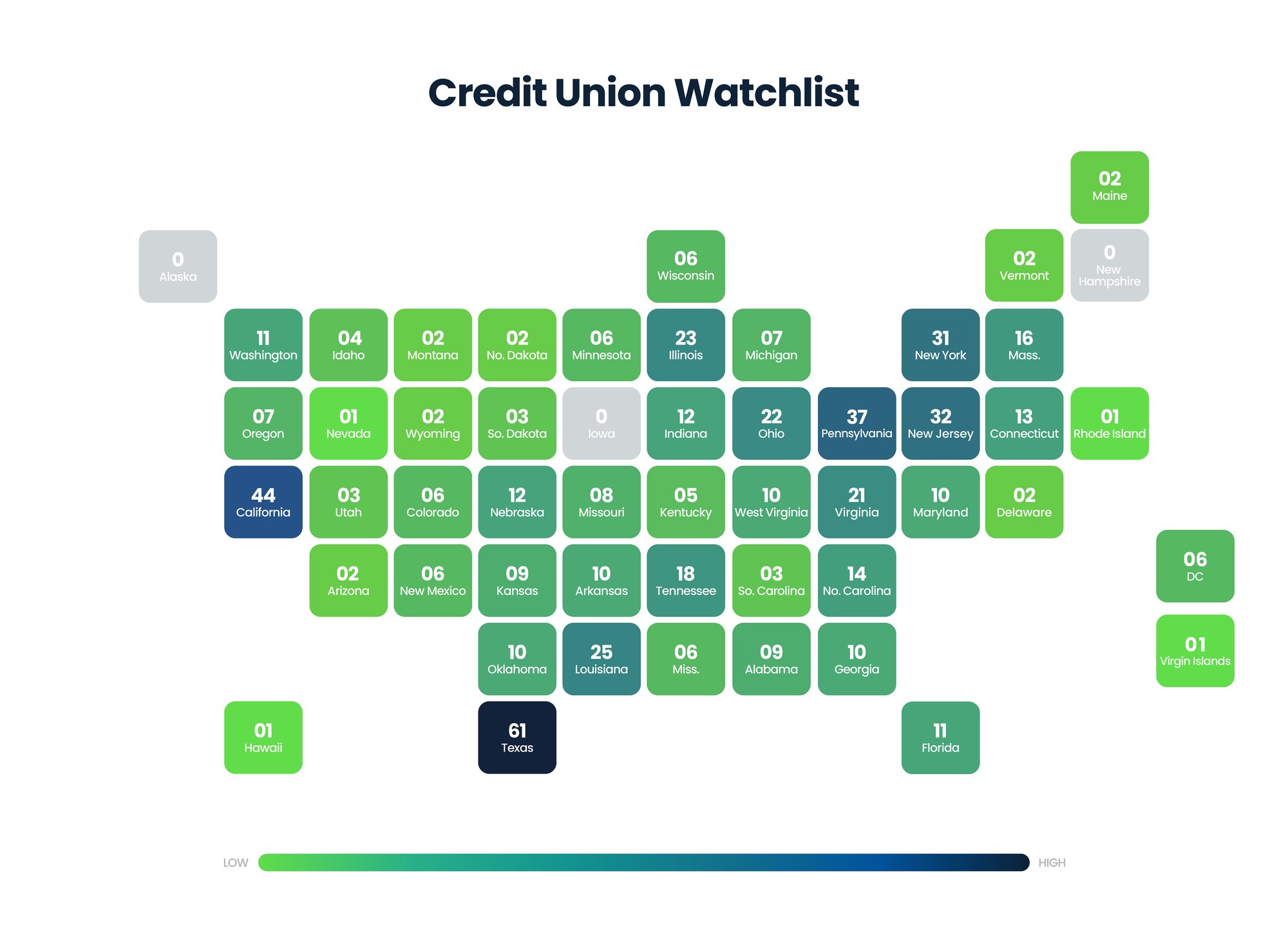
Texas credit unions dominate the watchlist, leading the country with 61 institutions, followed by California with 44. Pennsylvania (37), New Jersey (32), and New York (31) also show significant concentrations.
Regionally, the South has the strongest concentration, with 231 of the 565 watchlist credit unions. The Northeast follows with 134, the Midwest with 110, and the West with 89.
Credit Union High-Likelihood Group
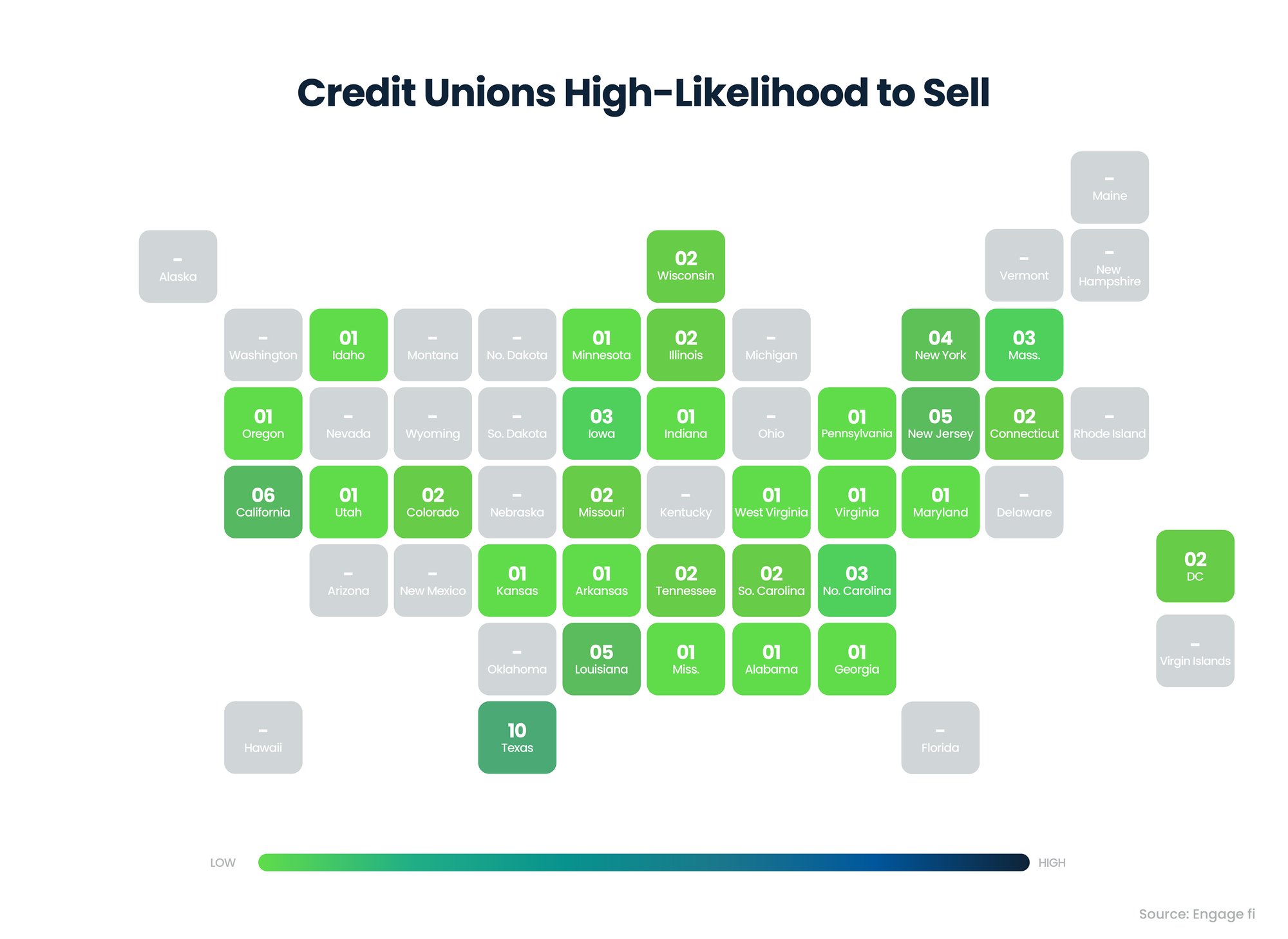
Texas again leads the high-likelihood group with 10 credit unions, followed by California with six. Louisiana and New Jersey each have five, while New York has four.
The South is the clear center of elevated selling pressure, accounting for 31 of the 69 high-likelihood credit unions. The Northeast follows with 15, the Midwest with 12, and the West with 11.
Banks
The maps below highlight where banks are showing elevated financial pressure and where the geographic mix has shifted since the prior quarter.
Bank Watchlist
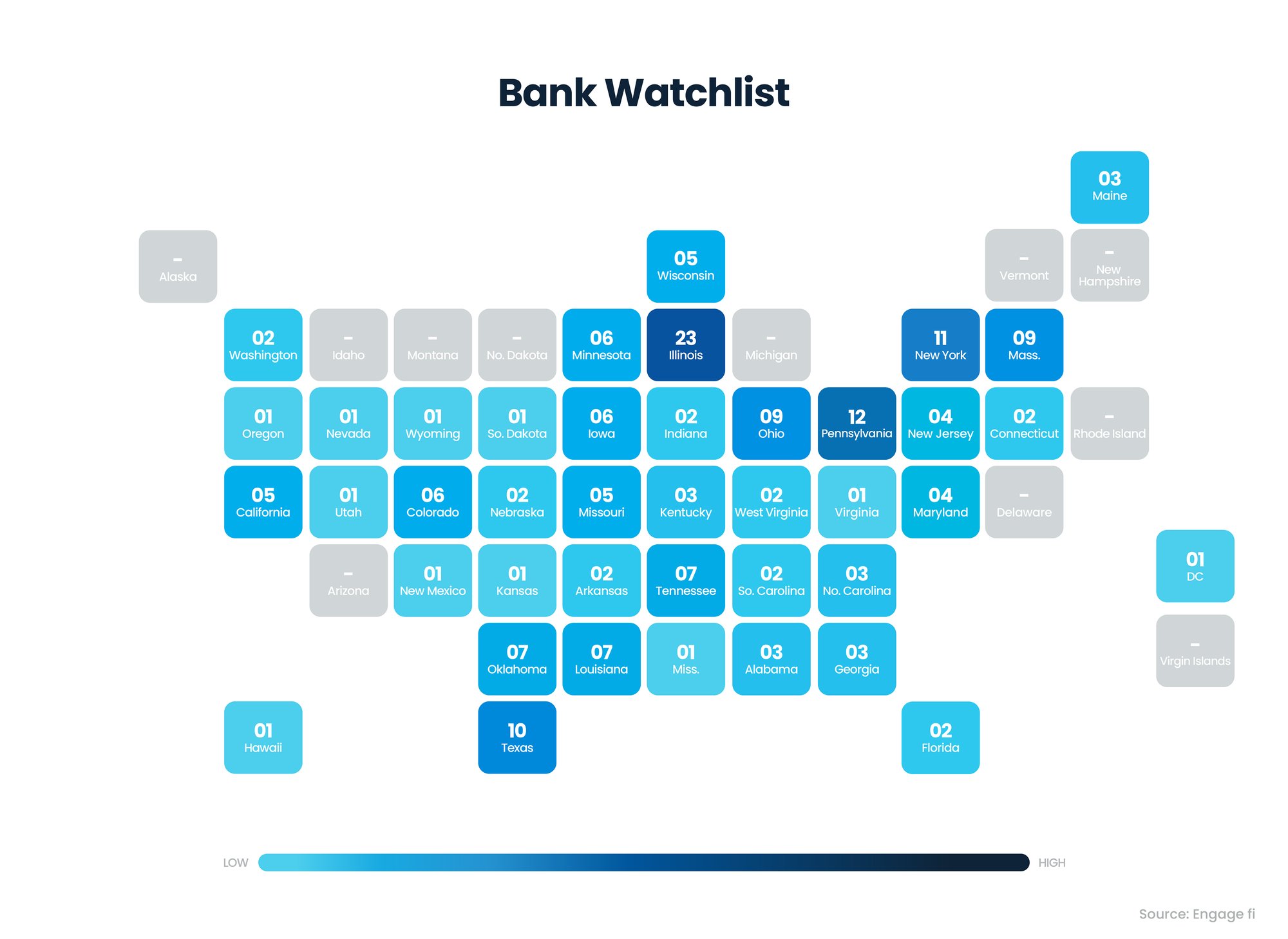
Illinois has the most watchlist banks, with 23 institutions, followed by Pennsylvania with 12, New York with 11, and Texas with 10. Massachusetts and Ohio each have nine.
The Midwest remains the largest region, with 60 of the 178 watchlist banks, but the South is close behind at 58. Compared with the first quarter of 2026, the geographic mix has shifted: Texas, Tennessee, and Oklahoma increased, while Ohio and California declined.
Bank High-Likelihood Group
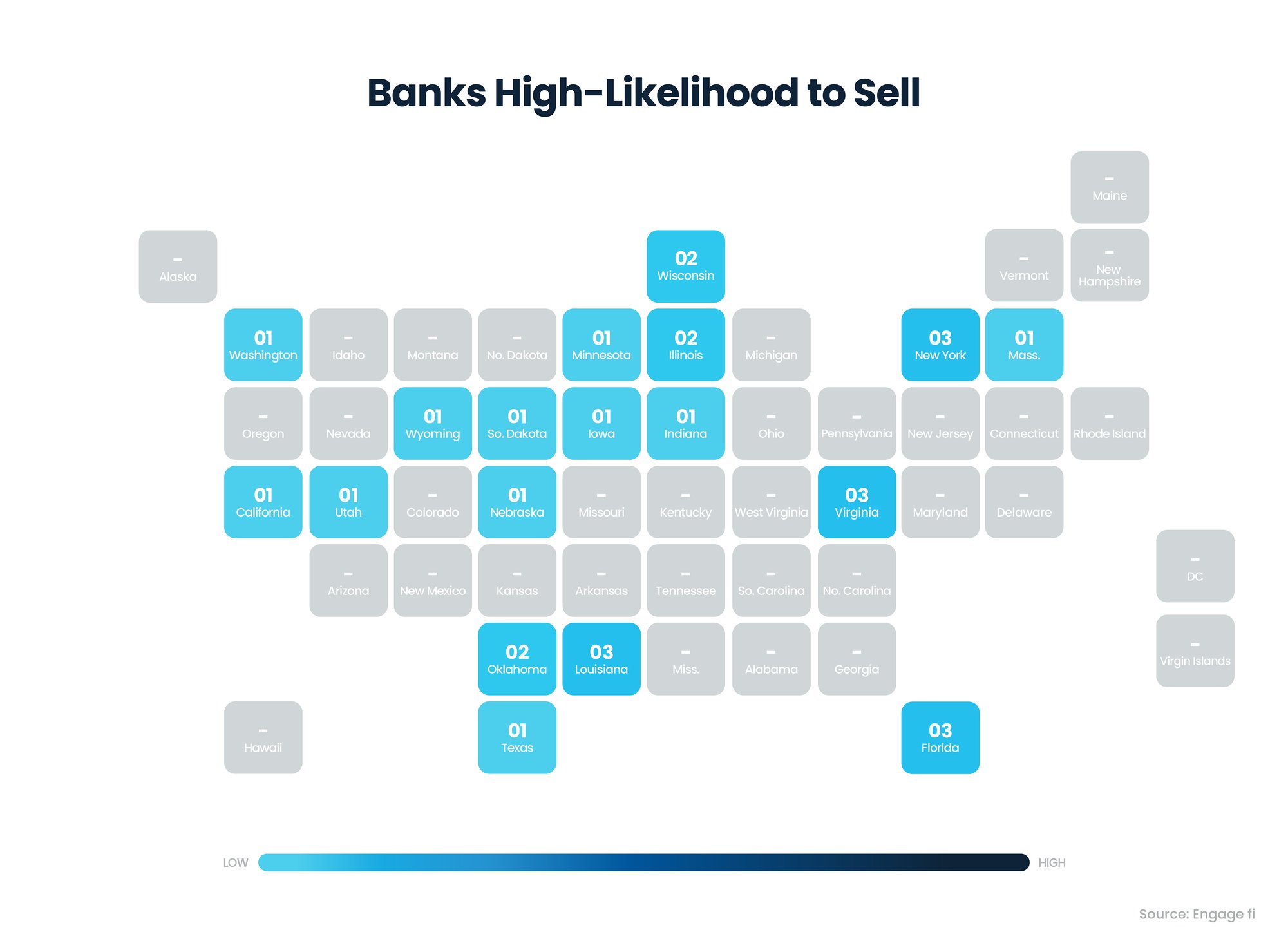
Florida, Louisiana, New York, and Virginia share the top position, with three high-likelihood banks each. Illinois, Oklahoma, and Wisconsin follow with two each.
The South accounts for 12 of the 29 high-likelihood banks, followed by the Midwest with nine. While the overall total changed only slightly from the prior quarter, from 30 to 29, the state and regional mix shifted meaningfully.
Strategic Implications
Many mid-size banks and credit unions are approaching an inflection point at which continued independent investment in modern technology, data, and compliance infrastructure may no longer be economically viable.
The clustering of pressure in specific states and regions means competition for attractive partners will intensify locally, rewarding organizations that act early, have clean data, and present a clear strategic story to prospective buyers or merger partners.
Institutions that delay may find themselves negotiating from a position of weakness, with outdated technology platforms and deteriorating financial metrics limiting both valuation and partner choice.
To read the report in its entirety, click the link, Access Full Report.
Related Services
Guidance through experience.
Delivering strategic advisory solutions for banks and credit unions navigating a merger or acquisition.